During thanksgiving break, I continued reading demon in the freezer. The detailed descriptions of the smallpox victims, the pustules, the scabbing, the cytokine storm, and the virus melt caused me to lose my appetite for thanksgiving dinner.
However, I was very confused on the ending. It seems that after a super-smallpox was developed, and the anthrax sample was analyzed, there was no correlation between them. They were both potentially used by terrorists but they never grew smallpox in anthrax spores, only infected many monkeys and were allowed to make a super pox, a potential vaccine that will only work immediately before exposure (in a war environment), but were not allowed to destroy the live strains of the virus.
The ending remains that human nature is not mature enough to see that world eradication is better, or more honorable than making a superpox to use against potential terrorists. The child's arm at the end represents the suffering that will stem from the superpox, all because a man in Russia was fiddling with a cure smallpox, and world leaders refused to kill the strains so that they could one day be more powerful.
It's sad to say members of the CDC, WHO, Vector, USAIRMD are not mature enough to eradicate smallpox for the good of all human beings on earth; instead, they continue testing to rival Russia, and eventually create a superpox with a 100% fatality rate and no real vaccine protection.
Tuesday, December 3, 2013

Journal 11/18 - 11/24
This week we continued Chemical Warfare, and I researched Syria's Chemical Weapons for my research draft.
The information on Sarin was incredibly helpful and clarified what I had read in other sources, which enabled me to participate a ton in class that day.
Topic Writing Assignment #4 was very pleasant work to do because it really helped me understand many if not all of the topic we've covered: reprodgenetics (Cloning, nuclear transfer); Eugenics (how GMO's will be naturally selected to breed); Transgenics (How a gene from one organism can be spliced into another); and perhaps even chemical warfare (make a purposeful allergen from a spliced gene, or a gene that would affect a country's main food source).
It was also less like a paper, but with the same (if not more!) time put into it to visualize and condense the information into a few figures.
I also began reading Demon in the Freezer, which illustrates the history of smallpox, the science behind smallpox, and the details of outbreaks and possible eradication. It begins with an anthrax attack on a citizen, then divulges into talking about smallpox, so I can only assume bio terrorists grew anthrax in a smallpox culture and are now going to kill everyone.

http://www.bt.cdc.gov/agent/smallpox/smallpox-images/smallpox3.htm
The information on Sarin was incredibly helpful and clarified what I had read in other sources, which enabled me to participate a ton in class that day.
Topic Writing Assignment #4 was very pleasant work to do because it really helped me understand many if not all of the topic we've covered: reprodgenetics (Cloning, nuclear transfer); Eugenics (how GMO's will be naturally selected to breed); Transgenics (How a gene from one organism can be spliced into another); and perhaps even chemical warfare (make a purposeful allergen from a spliced gene, or a gene that would affect a country's main food source).
It was also less like a paper, but with the same (if not more!) time put into it to visualize and condense the information into a few figures.
I also began reading Demon in the Freezer, which illustrates the history of smallpox, the science behind smallpox, and the details of outbreaks and possible eradication. It begins with an anthrax attack on a citizen, then divulges into talking about smallpox, so I can only assume bio terrorists grew anthrax in a smallpox culture and are now going to kill everyone.
http://www.bt.cdc.gov/agent/smallpox/smallpox-images/smallpox3.htm
Journal 11/11 - 11/17
This week we learned about chemical warfare. Many things surprised me in the power point, especially the fact that poison was indeed considered chemical warfare. The arguments for and against chemical warfare were sound, and although I believe it would be unfair to use incapacitating technologies, and advantages the other side wouldn't have access to, I would repremind myself by saying this is WAR, and the honor is War is long gone, in fact, I would argue there hasn't been any honor in war since the development of tools to use in war.
The powerpoint was incredibly helpful building arguments for my PRO Bio/Chem Warfare presentation, in which I took apart the con argument from the powerpoint.
There is no honor in war, therefore chemical weapons are natural progression of technological advantages used in conflict.
They may end suffering more quickly.
They may protect you.
(Pepper spray is also a chemical weapon).

http://www.damonfinch.com/id104.html
The powerpoint was incredibly helpful building arguments for my PRO Bio/Chem Warfare presentation, in which I took apart the con argument from the powerpoint.
There is no honor in war, therefore chemical weapons are natural progression of technological advantages used in conflict.
They may end suffering more quickly.
They may protect you.
(Pepper spray is also a chemical weapon).
http://www.damonfinch.com/id104.html
Journal 11/4 - 11/10
This week the class watched "Harvest of Fear", a nova special on GMO's and GMF's. I believe that the Green Liberation Front is at fault, that they could have initiated a sit-in at the University instead of blowing it up, that is the difference between non-violent resistance and terrorism. Sit-in's, or occupying a place, does not instill fear like setting fire to a building.
A few students were outraged by the portrayal of Africa needing the innovations of GMF's, oversimplifying the problems of a third world country as "not having enough food" and "too much poverty" instead of the true disaster of the equal production, distribution, and transportation of the food supply. Although I agree the problem is oversimplified, Monsanto graciously agreed to sponsor the program without making an ounce of profit, only PR gain. Therefore, I believe that third world countries, or any country, should take advantage of the GMF's they're offered, simply because it could protect better against pests, and they have seeds provided. The farmers do not necessairily need to be educated to plant or harvest their crops any differently, so the GMF's could significantly increase a farmer's yield, and thus his wealth, and his countries wealth, without the implementation of western ideals, western occupation, or foreign aid. Simple seeds should be seen as what they are, a potential for natural growth, not pity, doubt, or oversimplification.

Yams
http://thechalkboardmag.com/superfood-spotlight-yams
A few students were outraged by the portrayal of Africa needing the innovations of GMF's, oversimplifying the problems of a third world country as "not having enough food" and "too much poverty" instead of the true disaster of the equal production, distribution, and transportation of the food supply. Although I agree the problem is oversimplified, Monsanto graciously agreed to sponsor the program without making an ounce of profit, only PR gain. Therefore, I believe that third world countries, or any country, should take advantage of the GMF's they're offered, simply because it could protect better against pests, and they have seeds provided. The farmers do not necessairily need to be educated to plant or harvest their crops any differently, so the GMF's could significantly increase a farmer's yield, and thus his wealth, and his countries wealth, without the implementation of western ideals, western occupation, or foreign aid. Simple seeds should be seen as what they are, a potential for natural growth, not pity, doubt, or oversimplification.
Yams
http://thechalkboardmag.com/superfood-spotlight-yams
Monday, December 2, 2013
Journal 10/28 - 11/3
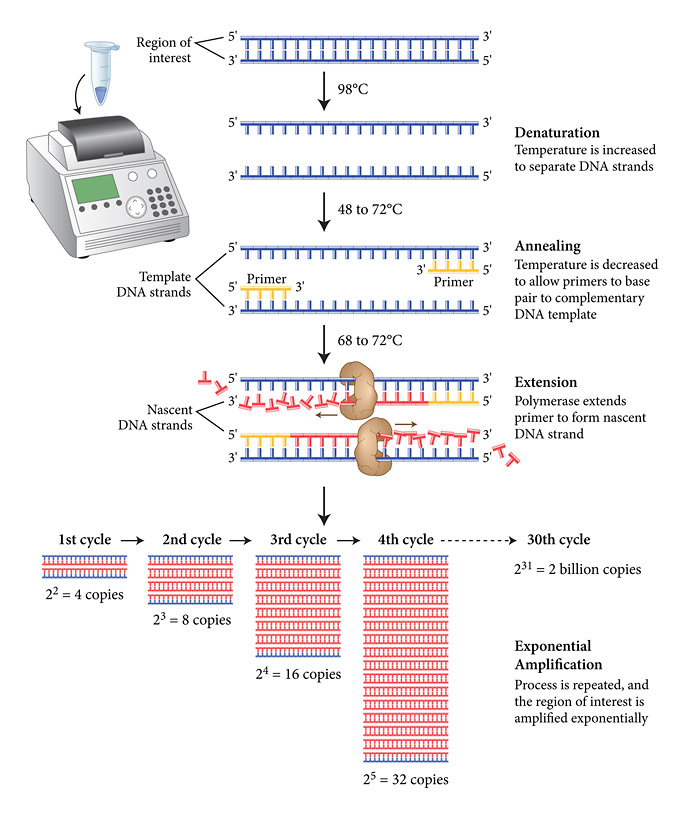
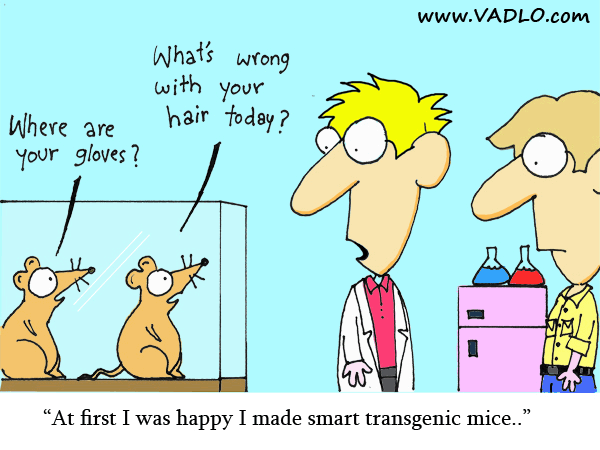
This week we learned about a PCR reaction, or polymerase chain reaction, in which a gene (made of DNA) is injected and amplified, that is, billions of copies are made of the single gene. It can then be inserted into a bacterial plasmid, a holding vessel, until it is to be used to genetically modify an organism, or used in medical applications to test if an organism contains the gene, as we tested for the presence of the Bt gene, a delta endotoxin.
First, the DNA of the desired (extracted) gene is added to an extraction mix, and incubated at 95 degrees Celsius, in which the DNA is denatured, that is, the double helix stricture is broken apart into 2 free-floating strands, releasing the DNA into the liquid.
Next, we add dilution mix, and pipet our sample up and down repeatedly to create a homogeneous solution, with an equal concentration of solute throughout.
Then centrifuge your sample for 2 minutes, separating the DNA, promoters, primers, and liquid within the sample. Mix with red PCR mix, which may contain the appropriate promoters and DNA polymerase.
Place into the PCR machine, which hats up (denaturing) and cools down (annealing) the DNA, to amplify it, or produce many copies that can be studied.
The sample is then put left to sit at room temperature, in which the DNA is annealed, or brought back together through primers that create complementary strands, by base pairing with the promoter to create a complementary DNA template. At this point, only promoters and primers have bonded to the DNA
The sample is the extended, when DNA polymerase extends from the primer to form a new DNA strand, complementary to the free-floating strands of DNA. These strands can bond, and the process begins again, creating new strands.
https://www.neb.com/~/media/NebUs/Page%20Images/Applications/DNA%20Amplification%20and%20PCR/pcr.jpg
First, the DNA of the desired (extracted) gene is added to an extraction mix, and incubated at 95 degrees Celsius, in which the DNA is denatured, that is, the double helix stricture is broken apart into 2 free-floating strands, releasing the DNA into the liquid.
Next, we add dilution mix, and pipet our sample up and down repeatedly to create a homogeneous solution, with an equal concentration of solute throughout.
Then centrifuge your sample for 2 minutes, separating the DNA, promoters, primers, and liquid within the sample. Mix with red PCR mix, which may contain the appropriate promoters and DNA polymerase.
Place into the PCR machine, which hats up (denaturing) and cools down (annealing) the DNA, to amplify it, or produce many copies that can be studied.
The sample is then put left to sit at room temperature, in which the DNA is annealed, or brought back together through primers that create complementary strands, by base pairing with the promoter to create a complementary DNA template. At this point, only promoters and primers have bonded to the DNA
The sample is the extended, when DNA polymerase extends from the primer to form a new DNA strand, complementary to the free-floating strands of DNA. These strands can bond, and the process begins again, creating new strands.
https://www.neb.com/~/media/NebUs/Page%20Images/Applications/DNA%20Amplification%20and%20PCR/pcr.jpg
Journal 10/21 - 10/27
We began transgenics this week, reading and synthesizing information from several articles on GMO's, or Genetically Modified Organisms, mostly crops.
GMO's splice naturally occurring genes from other organisms into plants so that they express a gene similar to a pesticide or herbicide that would have to be sprayed on them. However, the genes selected to splice into the crops often have unintended consequences.
Examples of GMO's include Bt corn, which kills caterpillars that became monarch butterflies; bio luminescent cats; goats modified to lactate spider-silk protein; golden rice enriched with vitamin A to prevent blindness in 3rd world countries; and bacteria growing insulin for diabetes patients.
GMO's splice naturally occurring genes from other organisms into plants so that they express a gene similar to a pesticide or herbicide that would have to be sprayed on them. However, the genes selected to splice into the crops often have unintended consequences.
Examples of GMO's include Bt corn, which kills caterpillars that became monarch butterflies; bio luminescent cats; goats modified to lactate spider-silk protein; golden rice enriched with vitamin A to prevent blindness in 3rd world countries; and bacteria growing insulin for diabetes patients.
Does a disorder change an individual's ability to contribute to society?
Do severe physical or mental and physical disorders (severe based on their ability to lower IQ or kill quickly), such as Duchenne's Muscular Distrophy,Cystic Fibrosis, or Down Syndrome, mean they cannot contribute to society as much as those with lesser disorders (non-lethal, doesn't affect IQ), such as Austism, ADHD, Asperegers, or being confined to a wheelchair?

Boy with Muscular Distrophy
http://blog.easystand.com/wp-content/uploads/2011/09/Donovan-Carlson-22.jpg

Girl with Cystic Fibrosis
http://livemedical.net/70-essential-facts-about-cystic-fibrosis/
vs.
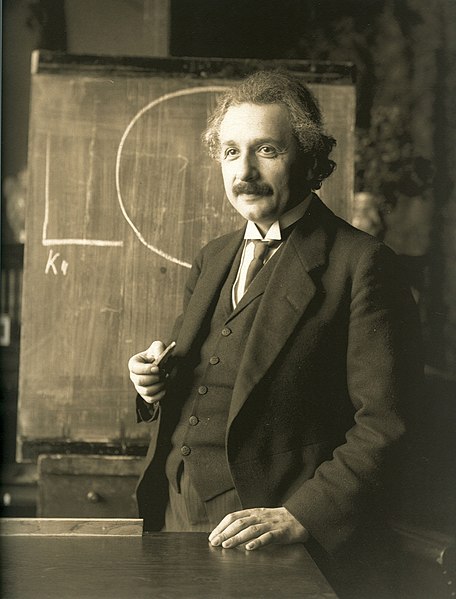
Albert Einstein (Thought to have Aspeger's or Autism)
http://en.wikipedia.org/wiki/Albert_Einstein
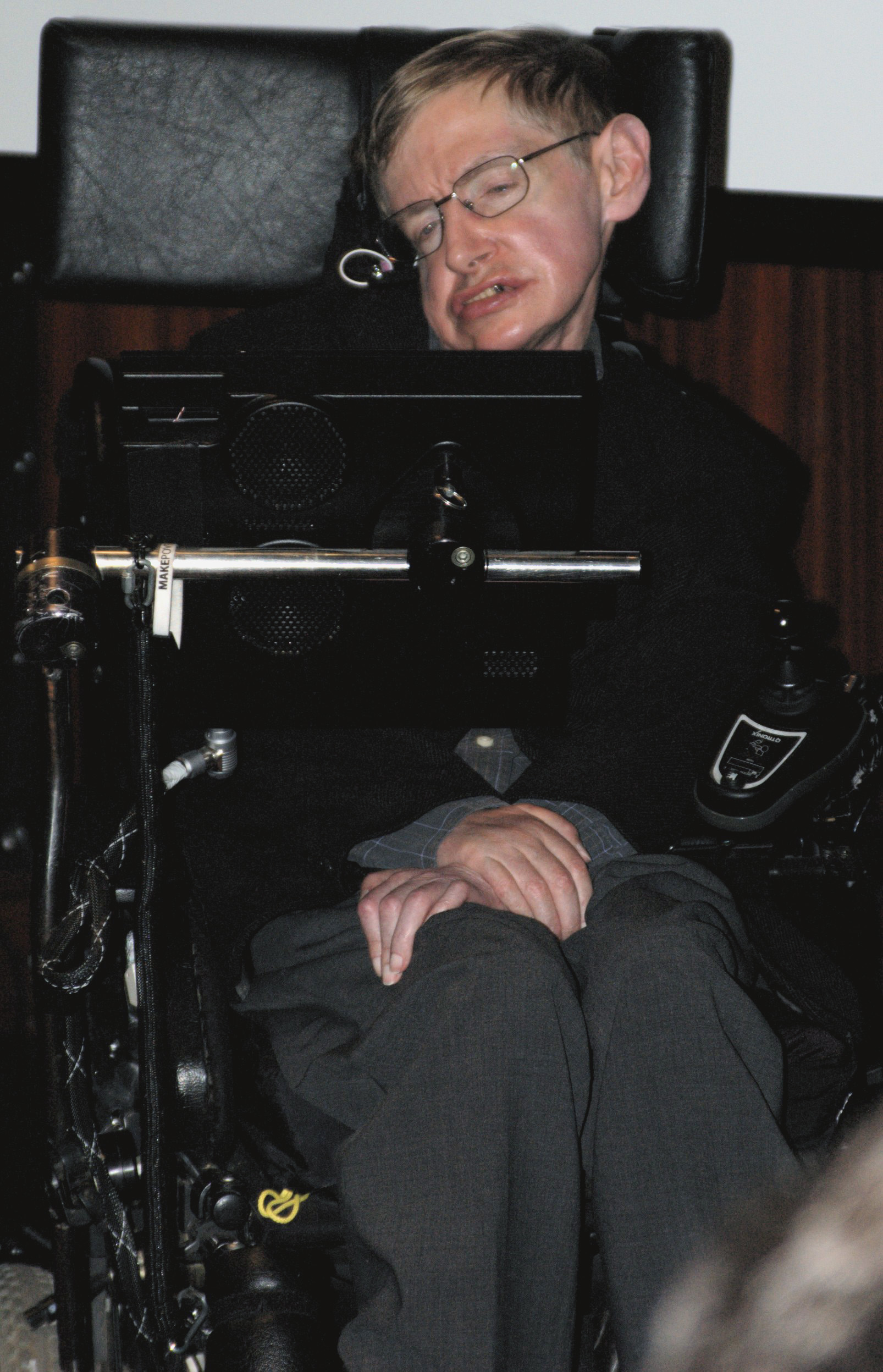
Stephen Hawking (invaluable to physics, astrophysics)
http://en.wikipedia.org/wiki/Albert_Einstein
Boy with Muscular Distrophy
http://blog.easystand.com/wp-content/uploads/2011/09/Donovan-Carlson-22.jpg
Girl with Cystic Fibrosis
http://livemedical.net/70-essential-facts-about-cystic-fibrosis/
vs.
Albert Einstein (Thought to have Aspeger's or Autism)
http://en.wikipedia.org/wiki/Albert_Einstein
Stephen Hawking (invaluable to physics, astrophysics)
http://en.wikipedia.org/wiki/Albert_Einstein
Journal 10/14 - 10/20
The Presentations on Eugenics gave the pros of treating chromosomal diseases and the cons of "treating" looks, intelligence, or any gene that is not life-threatening, which encompasses the general opinion on eugenics.
The class then had an interesting discussion on if we should eliminate sickle cell anemia, as having 1 recessive hbb gene would give the individual the ability to fight off malaria and allow the blood to clot. This reasoning could be applied to many disorders, including Autism, which may help the individual to study a subject obsessively to make a discovery. Furthermore, Stephen Hawking, who suffered a physical disability that gave him more time to think, was invaluable to the field of aerospace engineering, astronomy, and the discovering of black holes, event horizons, etc. It clearly depends on the individual, Einstein, who was Autistic, and Stephen Hawking, who as immobile, both had the drive to learn about and contribute to the fields through their own research and experimentation.
That point excludes those who has a severe mental disorder, which may not be able to contribute much to a STEM field, instead, they may reach out to their communities and educate others on their life, however, in the case of a society practicing extreme eugenics, their contribution would be meaningless because they wouldn't exist.
So should physically disabled people, or people with pre-dispositions to mental disorders that do not affect intelligence, such as Autism, ADHD, OCD, etc, be treated differently than severe mental disorders, such as Down Syndrome, or disorders that are likely to kill quickly, such as Duchene's Musclar Distrophy and Cystic Fibrosis, because those who do not die quickly and are able to live with unaffected intelligence can contribute more to society?
If every individual contributes to society, what contributions are considered superior? What about a genetically superior individual who is a minor, and simply goes to school? Does he contribute to his community simply by being educated? Building friendships?
More importantly, is the value of an individuals life based on their contribution to society?
The class then had an interesting discussion on if we should eliminate sickle cell anemia, as having 1 recessive hbb gene would give the individual the ability to fight off malaria and allow the blood to clot. This reasoning could be applied to many disorders, including Autism, which may help the individual to study a subject obsessively to make a discovery. Furthermore, Stephen Hawking, who suffered a physical disability that gave him more time to think, was invaluable to the field of aerospace engineering, astronomy, and the discovering of black holes, event horizons, etc. It clearly depends on the individual, Einstein, who was Autistic, and Stephen Hawking, who as immobile, both had the drive to learn about and contribute to the fields through their own research and experimentation.
That point excludes those who has a severe mental disorder, which may not be able to contribute much to a STEM field, instead, they may reach out to their communities and educate others on their life, however, in the case of a society practicing extreme eugenics, their contribution would be meaningless because they wouldn't exist.
So should physically disabled people, or people with pre-dispositions to mental disorders that do not affect intelligence, such as Autism, ADHD, OCD, etc, be treated differently than severe mental disorders, such as Down Syndrome, or disorders that are likely to kill quickly, such as Duchene's Musclar Distrophy and Cystic Fibrosis, because those who do not die quickly and are able to live with unaffected intelligence can contribute more to society?
If every individual contributes to society, what contributions are considered superior? What about a genetically superior individual who is a minor, and simply goes to school? Does he contribute to his community simply by being educated? Building friendships?
More importantly, is the value of an individuals life based on their contribution to society?
Doomed to the same Fate?

http://bill-purkayastha.blogspot.com/2013/07/child-soldier.html
Child Soldiers VS. Clones
Doomed to the Same FATE?
http://soniaabbasshah.wordpress.com/2013/03/10/never-let-me-go-a-film-based-on-hyperreality/
Journal 10/7 - 10/13
During Never Let Me Go, I thought about the individual worth of each human being. Does a cloned human, a mentally unwell human, a physically disabled person, have the same rights as a genetically-original human?
Our laws separate the rights to children from the rights of adults, so should the rights of the unmentionables (mentioned above) be considered permanent children, subject to the rules of their guardian?
The clones in Never Let Me Go were sheltered, and lived their lives for the cause given to them by their society. Their lives were pre-structured in a destiny similar to modern child soldiers, trafficked too early to know anything of their opportunities outside their current destiny. Grown for a purpose, like animals to the slaughterhouse.
Gattaca and Never Let Me Go both illustrated the prejudice, predilection, and discrimination that results from a society embracing selective breeding. Selective Breeding, or eugenics, can be grouped into two categories: positive eugenics and negative eugenics. Positive eugenics, that is, encouraging "genetically superior" individuals to breed, rivals negative eugenics, or preventing "genetically inferior" individuals from breeding.
In Gattaca, although society allowing Antione to live, he was discriminated against for being genetically inferior compared to society's standards for newborn babies, and thus, his destiny was pre-determined for low wage jobs. This is positive eugenics, encouraging genetically superior babies to be born through pre-genetic testing and in-vitro fertilization; however, discrimination based on genetic makeup is still negative, society indirectly discourages his existence by limiting his opportunities, or destiny.
In Never Let Me Go, Kathy's society is negative eugenics, that is, clones cannot have children, and are "genetically inferior". Kathy's destiny is also limited, which begs to add a third category to eugenics, indirect eugenics, which is alive today.
Indirect eugenics would be defined as an indirect way society begets discrimination of an individual because of their genetic makeup, seen in both Gattaca and Never Let Me Go. An example would be the disapproval of a couple keeping a disabled baby, because it goes against natural selection, and the very definition of eugenics, the "hereditary improvement of the human race by controlled selective breeding" (lecture).
Journal 9/30-10/6
Following our discussion of eugenics, the class decided as a whole that as American citizens, or perhaps as humans, we deserve the freedom of choice. We can choose to reproduce, and if everyone can choose to reproduce, then we all have the freedom to choose. If we all have the freedom to choose, then everyone has the freedom to choose to reproduce. If everyone has the freedom to choose to reproduce, than everyone should be able to choose to have children.
Mental illness, infertility, and sterilization are all possible occurrences, however, and require input from a governing body, a government or a health organization, perhaps, to aid reproduction. Is it their right to use reproductive technologies available simply because it is their right to have sex?

Selective Breeding, that is, naturally occurring events within nature affect who gets to reproduce, with how many mates, how many times. Different reproductive strategies are usually grouped into R-selection and K-selection. R-selection is for organisms like fish and mice, who produce many offspring, who develop and mature quickly. Organisms with R-selection have a shorter life-span, and many offspring may not live out their full life due to lack of resources and a large brood (progeny). K-selection is for organisms like humans, elephants, etc. These organisms have few offspring who are slow to mature, but have a better chance of survival because there are more resources available (lesser brood/progeny), and because of the parental investment placed in their survival. Elephants and Humans teach their offspring how to live, and take care of them while they develop, thus, they can support larger brains (intellect) and learn more from their parents, while stuck in a potentially dangerous state o development without the ability to protect themselves. Thus, parental investment is inversely related to the amount of offspring an organism has, and their rate of development.
To relate this to Never Let Me Go, I believe that humans are meant to have a few children, and although I enjoy the urban centers and innovations that have come from a large population, I can very easily imagine a world where there are so many humans that they cease to be regarded as human beings, and more like expendable mice, just like the clones.
Sunday, September 29, 2013
Journal 9/23-29
Gattaca is a sobering reality. Today, we already have a Pre-implantation Genetic Diagnosis (PGD), we don't have to wait until the child is born to know their pre-dispositions. The boundaries between public and private life have been breached; now employers can own their employee's facebook passwords, and view their lives online as well as their legal records. Although we don't give blood to enter our work, we do sign in, whether that be with a physical presence, card, or online credentials. Our progress can be monitored, and if questioned, employee's must provide urine samples for drug tests, or breathalyzers for alcohol abuse.
Caste systems exist today based upon the state of family and finance, however, genomic status would be just as derogatory. You cannot choose your family or your genome, but when the day comes where I can purchase a "smart gene", I would do so immediately to ensure my child had the requirements to work at Gattaca.
Caste systems exist today based upon the state of family and finance, however, genomic status would be just as derogatory. You cannot choose your family or your genome, but when the day comes where I can purchase a "smart gene", I would do so immediately to ensure my child had the requirements to work at Gattaca.
Monday, September 16, 2013
Reflection on "Smart Gene"
The "smart gene" is a genetic luxury. It will reiterate the disparity between classes, and, when perfected, will leave families unable to afford the "extra intelligence" in the dust. It is immoral, but if I could afford it, I would purchase it, and implant it into the developing embryo, my pride and joy. All of the points raised in discussion are valid, including the degradation of work ethic, money, and parenting. Points were also raised that countered these notions, stating that teenagers by nature as lazy procrastinators, why wouldn't slightly more intelligent teens that perhaps didn't have to work as hard be more lazy?
Your "smart gene" child is going to be every bit as useless for some part of his/her life than every other child. They each have the possibility to become greedy, envious, or evil. Their intelligence would be used for their own agenda's, which would be dictated by their environment. Looking at a child's life as an overall experience, the smart gene begins to mean less and less. As Anna pointed out, the brightest child could always be the most abused. Potential would come to be, or differentiate into skills, if it is nurtured. Unfortunately, we can't let our children differentiate through life with electrical pulses, only their own life experience.
Just as being a skinny doesn't guarantee popularity, or any social life, I would pay for a gene that would ensure they were not pre-disposed to obesity, for their physical and mental health.
Thursday, September 12, 2013
Short Writing Assignment #3
Rebecca Cupp
Biotechnology
Mr. Fantz
September 10, 2013
With
the recent technological breakthroughs of the Human Genome Project, In-Vitro
Fertilization (IVF), and Nuclear Translation, reproduction has strayed from a
private act in the bedroom to a multimillion dollar industry (Silver 81). New
reproductive techniques such as Cyrogenesis, the Pre-Genetic Determination Test
(PGD), and Intracytoplasmic Sperm Injection (ICSI), have created safe
alternatives for infertile couples, and in some cases, a preferred alternative
to natural reproduction (“18 Ways to Make a Baby”).
Reproduction
is defined by Robert Brooker, Professor of Genetics at the University of
Minnesota-Twin Cities, as “the generation of offspring by sexual or asexual
means”, however, this definition must be more distinct to apply to today’s
technologies (Brooker 414). Human reproduction, which is inherently sexual,
should only be considered natural if the offspring is the result of sexual
intercourse, without extraction, implantation, or injection; where the oogoctye
(egg cell), blastosphere, embryo, and fetus remain in the mother’s body until birth.
Many reproductive techniques, such as IVF, would therefore be considered
unnatural on account of oogacytes being extracted and implanted. ICSI would
also be considered unnatural because of the injection of sperm. IVF, PGD, ISCI,
and many other reproductive methods would all be considered unnatural, yet that
should not affect their legality, availability, or usage.
Although
many of these technologies have been defined as unnatural, they should be
accepted as legitimate alternatives to natural reproduction and continue to
provide couples all around the world with the gift of a lifetime: a child.
Unnatural conceptions utilizing reproductive techniques such as ICSI or IVF
yield the same happy, healthy babies as natural reproductions, and as such,
research and access of these methods should be upheld by law (“18 Ways to Make
a Baby”).
Many unnatural
reproduction techniques are already perfected, with the same probability of
achieving a live birth as a natural pregnancy. As Lee Silver, author of Remaking Eden, explains, the natural
chance of having a child; even if a fertilized, divided, and differentiated
embryo develop naturally, “there is still a 50% chance it will pass right
though her uterus without her even knowing it…” (61). And as of 2013, The Society for Assisted
Reproductive Technology, SART, found
that 46.2% of donor embryo’s (IVF) resulted in pregnancies, and 40.1% in live
births (“2013 Clinical Summary Report”). As more and more methods are
perfected, they should each become increasing available, affordable, and
acceptable to the public, simply because these techniques work.
"18
Ways to Make a Baby." PBS: Public Broadcasting Service. N.p., n.d.
Web. 8 Sept. 2013. <http://www.pbs.org/wgbh/nova/transcripts/2811baby.html>.
"2013
SART Clinical Summary." Society of Assisted Reproductive Technology.
N.p., n.d. Web. 11 Sept. 2013.
<https://www.sartcorsonline.com/rptCSR_PublicMultYear.aspx?ClinicPKID=0>.
Brooker,
Robert J., Eric P. Widmaier, Linda E. Graham, and Peter D. Stiling. Biology.
3 ed. Boston: McGraw-Hill Higher Education, 2013. Print.
Silver, Lee
M.. Remaking Eden: how genetic engineering and cloning will transform the
American family. New York: Avon Books, 1998. Print.
Subscribe to:
Comments (Atom)